

JOURNAL

40 Day Challenge - EXPANSION
Last week, we explored Sensitivity. We began to recognise Prana, the vital energy moving beneath our thoughts, emotions and physical body. We discovered that there is another layer of experience available when the mind becomes quiet enough to perceive it. Now the practice deepens.
Expansion is about increasing our capacity to use energy wisely. We begin to understand that energy isn’t simply something we have, it’s something we can cultivate, contain, shape and direct with intention.

40 Day Challenge - SENSITIVITY
As we enter week four of our 40-Day Journey, something begins to change. The first three weeks have worked primarily with the mind. We explored Presence, then Calming, then Stability. We learned to slow the activity of the mind and develop the ability to remain present.
Now we begin to turn our attention towards something more subtle: Sensitivity. This is the point where we begin to become more aware of Prana, the vital energy that moves through and animates the body.

40 Day Challenge - STABILITY
A stable mind isn’t necessarily a mind without thoughts. Thoughts and emotions will still arise. Stability means developing a different relationship with what arises. Instead of being immediately carried away by every thought, we can witness it. Instead of reacting immediately to every emotion, we can experience it. Instead of allowing every external event to determine our internal state, we create space between what happens and how we respond.

40 Day Challenge - CALMING
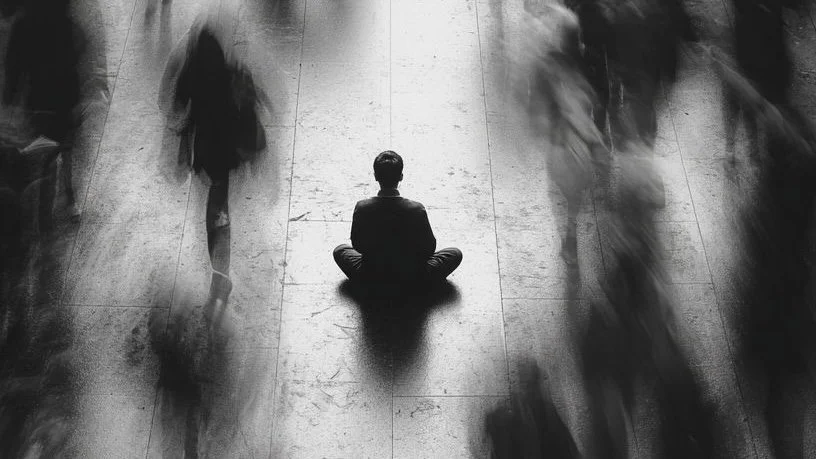
We live in a world that is constantly asking for our attention. There is always somewhere to be, something to do, someone to respond to and something demanding our energy. Our minds are constantly receiving information. We scroll. We consume. We react. We plan. We worry. We replay the past and anticipate the future. And often, without even realising it, we carry this constant activity with us into every part of our lives. This is why the practice of calming is so important.

40 Day Challenge - PRESENCE
Before we can change, we must first become present. As we begin our 40-Day Challenge, our first theme is Presence.
Forty days is long enough to create meaningful change, but the purpose of these first days is not to rush towards becoming a different version of ourselves.
It is to pause. To become present. To observe what is actually here.
The traditional teachings of Hatha Yoga describe a progressive journey of transformation. We don’t begin by asking the body and mind to do more than they are ready for. First, we prepare the ground. We purify. We strengthen. We stabilise. And from that foundation, we develop the capacity to go deeper.
Five Śaktis of the Divine - CHIT
What if the deepest part of you is not the body, the mind, your emotions, your thoughts or even your experiences?
What if there is something within you that has been quietly aware of all of it? In the Tantric tradition, Cit Śakti is the divine power of pure consciousness, the power to be aware.
It is the awareness that knows the body is moving, the breath is flowing, thoughts are arising and emotions are changing. It is the silent witness behind every experience.

Five Śaktis of the Divine - ĀNANDA.
What if you didn’t need anything to happen before you could experience joy?
In the Tantric tradition, Ānanda Śakti is the divine power of bliss, the recognition that our deepest sense of fulfilment is not something we need to acquire from the outside world. It is already present within us.
Most of us spend our lives searching for happiness through people, experiences, possessions, achievement and pleasure. We believe that when we have the right relationship, the right body, the right career, the right experience, or the right circumstances, then we will finally be happy.

Five Śaktis of the Divine - ICCHĀ
Before anything can be created, there must first be an intention for it to exist. In the Tantric tradition, this primordial power of intention is known as Icchā Śakti, the power of will.
Icchā Śakti is more than determination or ambition. It is the capacity to direct our energy towards what we truly value and remain unwavering in that direction. It is the force that moves consciousness from possibility into manifestation.

Five Śaktis of the Divine - JÑĀNA
We live in an age overflowing with information, yet genuine wisdom has never been rarer.
We can access millions of opinions with the touch of a screen, but that doesn’t necessarily bring us closer to truth. In fact, the more information we consume, the more difficult it can become to distinguish what is real from what is merely convincing.
This is why the Tantric tradition speaks of Jñāna Śakti, the divine power of discernment.

Five Śaktis of the Divine - KRIYA
There is a vast difference between being busy and being effective.
Many of us spend our lives constantly doing, working, planning, striving, and reacting. Yet often feel as though we’re moving in circles. Tantra teaches that the problem isn’t a lack of action. It’s a lack of aligned action.
This is where Kriyā Śakti comes in.
Kriyā Śakti is the divine power of action. It is the innate capacity to know what needs to be done and to do it without hesitation, doubt, or resistance. It is not forceful action driven by fear or ego, but effortless action arising from clarity and alignment with Dharma, your highest purpose.
When Kriyā Śakti is awakened, life begins to flow. Decisions become simpler. Procrastination dissolves. You stop wasting energy on what doesn’t matter and naturally move toward what does.

The Five Koshas - ANANDAMAYA
The Anandamaya Kosha is the subtlest of the five sheaths, the “bliss body.” It is the final veil between the individual and the Self. Here the unconscious gives way to pure presence, where the fluctuations of the ego temporarily dissolve and a deep sense of peace, contentment, and wholeness can be experienced.

The Five Koshas - VIJNANAMAYA
The Vijñānamaya Kośa is the sheath of higher intelligence, wisdom, discernment (viveka), and deep inner knowing. It is the seat of the buddhi, the faculty of intuition and discrimination that allows us to see clearly, beyond the fluctuations of the thinking mind.
It is here that our inner teacher resides, quietly guiding us toward our Dharma, our deepest purpose and the path most aligned with our true nature.
The Five Koshas - MANOMAYA
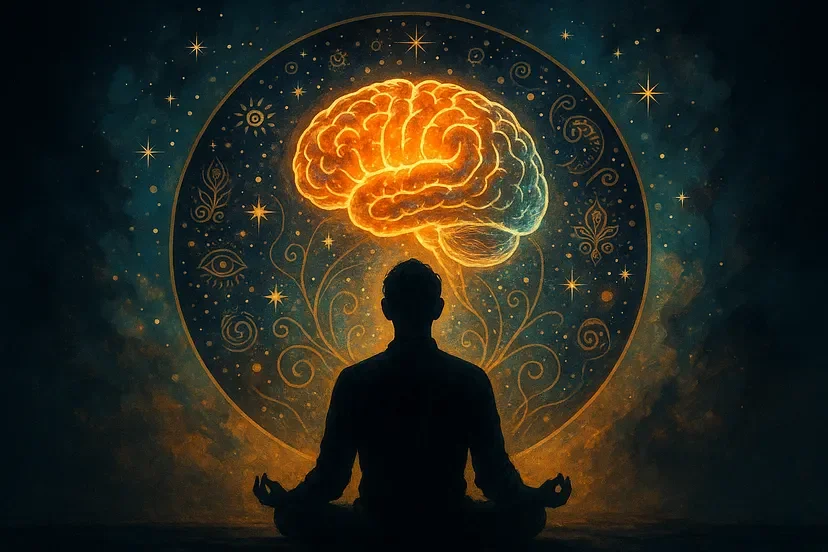
Manomaya Kosha is the mental-emotional sheath. It is composed of manas (the sensory mind), along with our thoughts, feelings, emotions, memories, imagination, and the processes of ideation and contemplation. It is also the sheath through which we interpret our experiences and construct meaning. The three guṇas, sattva (clarity), rajas (activity), and tamas (density) are said to strongly influence this layer of our being, colouring the way we perceive ourselves and the world.
The Five Koshas - PRANMAYA
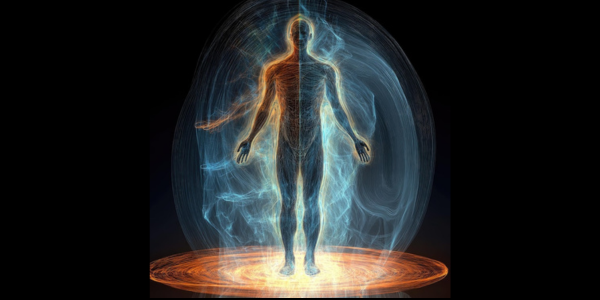
The second Kosha, Pranamaya Kosha, relates to an individual’s energy field or vital life force. Within this energetic or pranic layer exist several subtle systems, including the Chakras, Vayus, and Nadis, many of which cannot be physically measured or observed through conventional science. These systems work together to distribute and regulate prana throughout the body, influencing vitality, health, emotional balance, and consciousness. Of these, the Vayus are among the most accessible through practice and can be cultivated through conscious movement, and the intelligent application of the six pose categories of asana.
The Five Koshas - ANNAMAYA
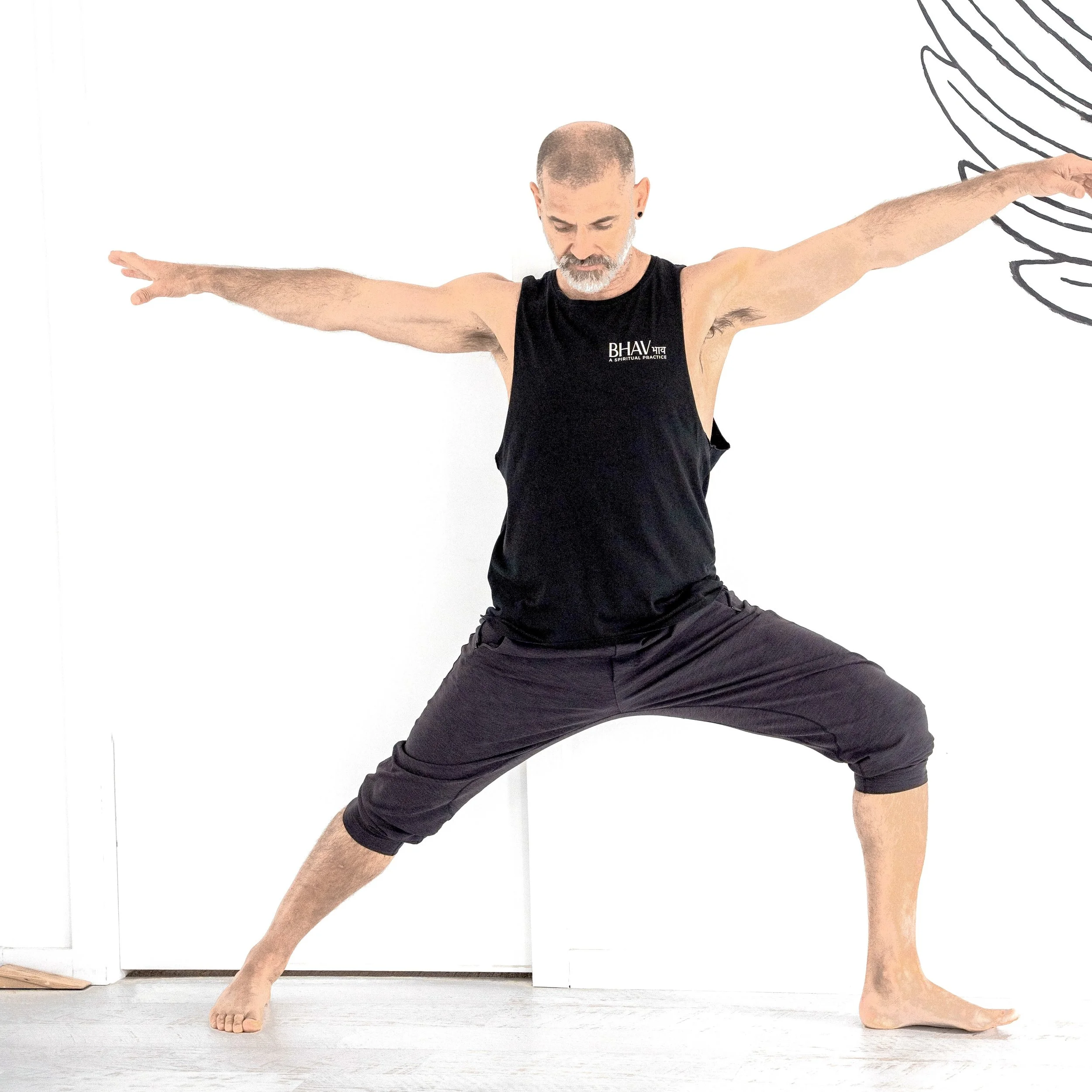
Annamaya Kosha, often referred to as the “food sheath,” is the outermost layer of our being according to yogic philosophy. It is the physical body, the tangible, material aspect of ourselves made up of the elements of the earth. This layer is called Annamaya because it is sustained by the food we consume, and its health and vitality are directly influenced by the nourishment we receive.

Seven Tongues of the Fire - BHAKTI
Bhakti is far more than a belief in a higher power. It is the recognition of the profound gift of existence itself and the cultivation of a living relationship with that mystery. It is the willingness to orient your life towards something greater than the limitations of the individual mind and ego. At its heart, Bhakti is an attitude of gratitude, a deep appreciation for the opportunity to experience this life and all that it offers.

Seven Tongues of the Fire - ADVAITA
Tantra embraces both duality and non-duality, honouring the dance of opposites while simultaneously revealing the underlying unity from which they arise. It teaches us to engage fully with life, recognising that every experience, whether pleasurable or painful, sacred or mundane, can become a gateway to awakening.
Advaita, on the other hand, points directly toward the Absolute. Its gaze is fixed on the transcendent reality beyond mind, body, time, and matter. Through deep inquiry and progressive detachment, the practitioner is guided toward the recognition that their true nature is pure awareness itself, untouched by the ever-changing movements of life.
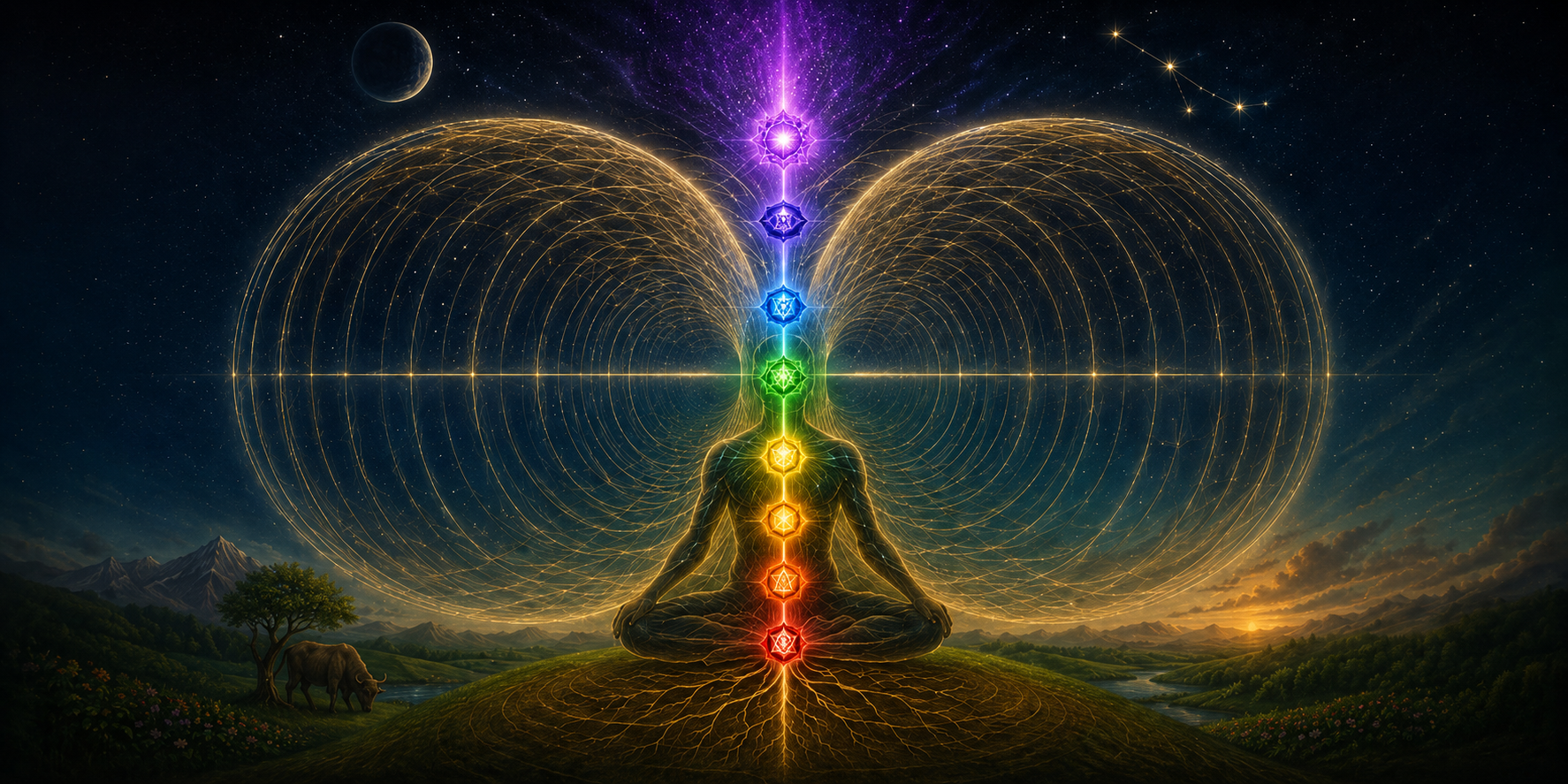
Seven Tongues of the Fire - SUSHUMNA
In the yogic tradition, the Suṣumṇā Nāḍī is known as the sacred stream of consciousness and energy that flows through the centre of our being. Often described as the energetic counterpart of the physical spine, it serves as the primary channel through which higher states of awareness are accessed and awakened.

Seven Tongues of the Fire - RUDRANI
This week we enter the fourth tongue of the fire, Rudrani. Sitting proudly at the centre of all seven tongues, Rudrani represents the very essence of the fire itself. It is the reminder of what we are truly keeping alive within us. Not simply intensity or ambition, but conscious transformation. The unwavering commitment to truth, awareness, discipline, and inner evolution.

Seven Tongues of the Fire - PRANA DHARANA
Prana Dharana is both a specific yogic technique and a broader concept within the traditional yogic sciences. At its essence, it is the art of gathering, stabilising, and directing Prana, Vital Life Force so that our practices become awakened from within rather than remaining purely mental or mechanical.